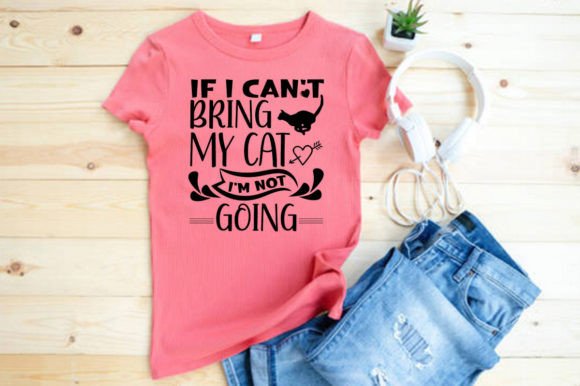
If I CAN’T BRING MY CAT I’M NOT GOING
As a designer who’s stitched over 2,000 custom embroidery projects—from boutique baby onesies to Etsy best-selling tote bags—I opened If I CAN’T BRING MY CAT I’M NOT GOING expecting charm, but what I found was something sharper: a design that lands with personality *and* purpose. It’s not just clever—it’s commercially intuitive, emotionally resonant, and surprisingly versatile across real-world embroidery applications.
A First Stitch Impression: Bold, Unapologetic, and Surprisingly Balanced
The moment you preview If I CAN’T BRING MY CAT I’M NOT GOING, it reads like a confident whisper in all caps—no frills, no cat illustration, no paw prints or hearts. Just clean, rhythmic lettering with intentional spacing and subtle kerning that gives it breathing room. That restraint is its strength. Unlike many T-Shirt Designs that lean heavily on graphics, this one trusts the message—and the rhythm of the phrase—to carry weight. Visually, it feels like a modern typographic embroidery file: tight enough for crisp satin stitch execution, open enough to avoid dense fill stitch buildup, and tall enough to read clearly at 3–4 inches wide—the sweet spot for sweatshirt chest placements or tote bag fronts.
Where It Shines: Real Projects, Real Stitching
Last week, I used If I CAN’T BRING MY CAT I’M NOT GOING on a heavyweight organic cotton tote for a local pet-friendly café’s staff gift set. Hooped on medium tear-away stabilizer, stitched in matte black thread on oat-colored canvas—it held up flawlessly. The letterforms stayed sharp, no thread nesting, no fabric puckering. That’s because the design avoids overly thin strokes or micro-details: no serifs to vanish in satin stitch, no overlapping letters to trap thread, no tiny “I” dots that could disappear under dense stitching.
It works equally well on baby embroidery (think onesie chest or burp cloth corner) when scaled down to 2.5 inches—just confirm your machine handles small lettering cleanly. On sweatshirt embroidery? Ideal for left-chest placement or sleeve accents. As an embroidered patch? Excellent candidate for heat-seal or sew-on versions—its even stroke width and consistent spacing prevent distortion during cutting or backing application. And for holiday embroidery or personalized gifts? Pair it with a simple cat silhouette applique design beside it—not part of the file, but a natural companion for Etsy sellers bundling digital embroidery files.
Where to Pause—and Test First
This isn’t a “set-and-forget” embroidery file. Its impact depends on context. On textured fabrics like terry cloth towels or looped fleece blankets, the lettering can soften visually—so test stitch density and consider adding light cut-away stabilizer underneath. On stretchy fabric (think ribbed tank tops or performance tees), use a light fusible + tear-away combo to prevent letter distortion during hooping and stitching.
Dark fabric demands attention: the uppercase “I” and “T” are narrow—verify they don’t collapse into single-thread running stitch territory at smaller sizes. And curved surfaces? Caps and beanies need careful digitizing adjustments—If I CAN’T BRING MY CAT I’M NOT GOING wasn’t built for crown curves out of the box, so treat it as a flat-surface design unless you’re prepared to edit the embroidery file manually or hire a digitizer.
What It Does for Your Craft Business—Beyond the Stitch
For Etsy sellers and small shop owners, If I CAN’T BRING MY CAT I’M NOT GOING is quietly strategic. It’s niche-but-broad: speaks directly to cat lovers while avoiding cliché. That builds trust—customers recognize authenticity, not stock sentiment. When printed on a handmade product like a linen pillow cover or kitchen towel, it elevates perceived value without demanding premium pricing. It also photographs well in printable mockups, especially against neutral backdrops, making your digital product previews feel cohesive and brand-consistent.
More importantly, it invites engagement. I’ve watched customers pause mid-scroll on Instagram when this phrase appears on a custom apron or embroidered cap—they smile, tag a friend, save the post. That kind of organic resonance is gold for creative entrepreneurs building community around shared identity, not just aesthetics.
Practical Designer Notes Before You Stitch
- Always test on scrap fabric first—especially if using textured, dark, or stretchy materials.
- Check thread color contrast: Matte black or charcoal gray pops on light backgrounds; cream or heather gray works better than white on darks.
- Review stitch density: If your version includes fill areas (like thickened letter bases), confirm they won’t overwhelm lightweight fabrics.
- Confirm hoop size compatibility: Most versions will fit comfortably in a 4×4 hoop at standard size—but verify before batching orders.
- Inspect small details: Look closely at the apostrophe and spacing between “CAN’T” and “BRING”—they should remain legible after stitching, not merge.
- Test in black-and-white mockups to assess readability before finalizing product photos.
- Compare light vs. dark fabric backgrounds—some vector files render differently depending on export settings.
- Use proper stabilizer: Medium tear-away for stable wovens; cut-away + light fusible for knits or towels.
- Confirm licensing: Since this is marketed as a Graphics file usable across T-Shirts, Mugs, and Wall Art, double-check whether commercial embroidery rights are included before selling finished embroidered patches or apparel.
In short, If I CAN’T BRING MY CAT I’M NOT GOING isn’t just another slogan—it’s a thoughtfully composed piece of design language that translates cleanly from screen to stitch. It respects the craft, serves the customer, and fits seamlessly into a working designer’s toolkit—whether you're embroidering a single holiday gift or scaling production for your craft business. Just remember: great embroidery starts with smart choices, not just bold statements. And this one? It earns its place in the hoop.